Welcome to my bonsai blog!


Welcome to my bonsai blog!

Look around! Use the Search box, browse the Archive, and leave comments. Click on any picture to enlarge it.
I would be honored to have you follow my posts. There are two ways to do that.
-- If you have your own blog, use Join this site
to have notifications of my posts sent to your blog's reading list.
-- If you don't have a blog,
use Follow by Email: new-post alerts will be sent to your email address. Pictures aren't included; that's just how Blogger does it. For the pictures you come here! ☺
Fora and vendors that I can recommend from experience are listed in the right sidebar.
For more about the ads, and just why I enabled them, please see "About the ads," below.
"And the LORD God made ... trees that were pleasing to the eye ..." Gen. 2:9, New International Version.

"Bonsai isn't just something I do; it's part of what I am." Remark to my wife and daughter.

Friday, February 28, 2014

Rivers, Wolves, and Bonsai

     Back in December I published a post on the debate about Turface®. In it I mentioned a principle that we all do well to keep in mind: One's soil mix, watering practices, fertilizing practices, and climate all interact, with each element affecting the impact of each of the others.

A few weeks after I wrote that, I came across an item on YouTube entitled "How Wolves Change Rivers." More out of curiosity than anything else -- after all, how could wolves change a river? -- I followed the link.

Friday, February 21, 2014

CD's and Nebari Development: Passing Along an Idea

     (With thanks to Adam Lavigne.)     

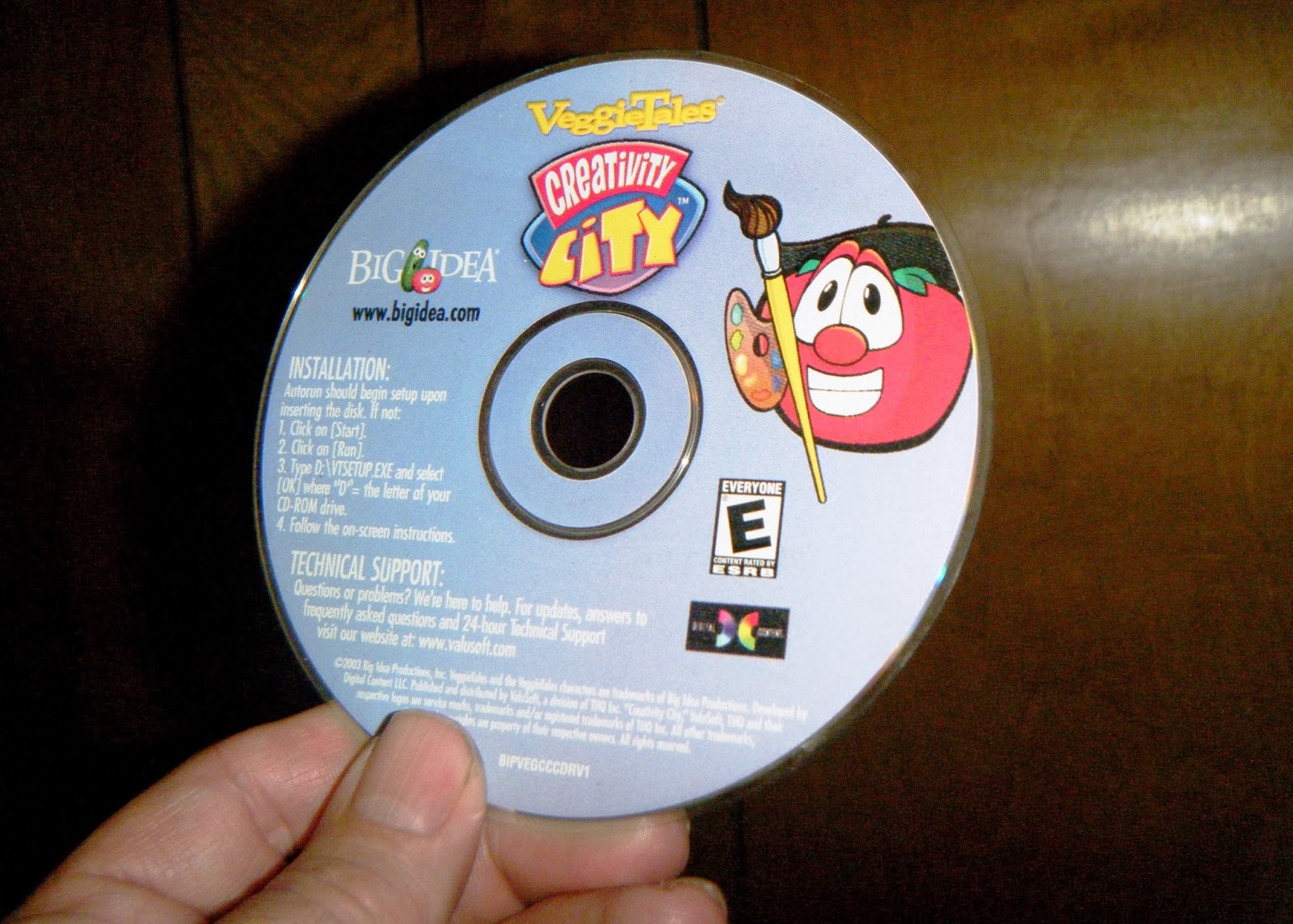
     Who doesn't have some lying around: non-reusable CD's on which you received software, or music that's now on your iPod, or even some advertising?

CD for a computer game that my daughter has now outgrown.
Many of us have heard of a traditional Japanese technique for enhancing a young tree's nebari: spread the roots over a tile, and then plant the tree with tile and roots a few inches deep and let it grow for several years. Adam Lavigne of Florida recently published a blog post about another way to achieve the same results: use those old CD's that are accumulating!

To see the post on Adam's blog, please click HERE.

To whet your interest, here is one of Adam's pictures from that post:
Photo by Adam Lavigne.
Adam and his friend used the technique on trident maples, but I think it would work just as well on other vigorous species, like many Ficus.

:-)  :-)  :-)

Sunday, January 26, 2014

Now It's The "Half-Hardies Two-Step"

     There's something about temperatures below zero Fahrenheit: for many of us in the USA, a psychological threshold is crossed when we refer to temperatures "below zero." Don't ask me why. We know that the gap between 1° and -1° is no different than the gap between 12° and 10° -- but it feels different just the same.

Saturday, January 18, 2014

A Further Comment on Turface

     Shortly after I posted my last post, I also ran the "Turface question" by Jerry Meislik, another very experienced bonsai grower. Many know Jerry as "Mr. Ficus." He has specialized in tropicals, especially Ficus, for many years, and I'm confident no one in the USA knows more about growing tropicals successfully in a cold climate!

Like Jack Wikle, Jerry had been contacted for comment by the Ann Arbor Bonsai Society; he and Rhona lived in Ann Arbor for many years before moving to the beautiful mountains of Montana. He also shared his response with me, and here it is, slightly edited for compactness.


"I think Jack's summation is accurate and totally appropriate. I agree with [his] analysis and wording.

Folks in the South, especially Florida, have vilified Turface for years. I suspect but can't prove that they had "Turface" that looked right but broke down quickly and created root problems. Likely they were sold kitty litter that looked like Turface but in actuality was not. But this is total conjecture on my part.


Turface, the real stuff, has stood the test of time by many excellent growers.


As always, experiment with different materials; but do it in tiny steps and [with] small test samples, with your expendable plants; and compare the new to your standard."


I think Jerry (and others) are right in suspecting that some people have been sold "Turface" that was not in fact Turface® but something else; something that was composed of a different clay to begin with, and/or fired at a lower temperature; and then passed off as something it was not. But at this point I don't know how to prove or disprove that suspicion.

One way or another, I agree completely with Jerry's advice: to keep experimenting to find what works best for you, but do it in steps and with expendable plants.

To visit Jerry's website, please click here. (I haven't bought either of his books yet, but they're on my wish list.)

:-)  :-)  :-)